
How to Tell Real Saffron From Fake: 7 Simple Tests
How to Tell Real Saffron From Fake: 7 Simple Tests
Telling real saffron from fake isn’t always easy, especially when saffron is sold as powder or in unbranded packaging. Some fake products even look similar in color to real saffron, but the aroma, taste, color release, and overall quality are very different.
In this guide, we’ll walk through the most reliable ways to identify real saffron so you can shop with confidence. We’ll also cover what genuine saffron actually looks like and which home tests are worth trusting. If you’d rather jump straight to a trusted source, check out our saffron buying guide or visit our homepage.
What Does Real Saffron Look Like?
Real saffron comes from the red stigma of the saffron crocus flower and is typically sold as whole threads. Its quality depends on factors like growing region, harvest timing, drying method, and storage conditions.
The key characteristics of real saffron include:
- Naturally irregular threads
- A natural red color — not an unnaturally bright or glossy red
- A distinct, lingering aroma
- Gradual color release in water
- A slightly bitter, distinctive taste
- No unnatural moisture or stickiness
- No extra coloring particles or foreign matter
Appearance alone isn’t enough for a definitive answer — it’s best to check several signs together. To learn more about what makes saffron valuable, see our page on saffron benefits.
7 Ways to Tell Real Saffron From Fake
1. Check the Shape and Appearance of the Threads
Real saffron threads are narrow at one end and slightly wider at the other, often with a trumpet-like or jagged tip. The threads are usually not perfectly uniform — if every thread looks identical in size and thickness, take a closer look. Fake products are often made from dyed fibers, other plant threads, or low-value parts of the flower.
Note: Real saffron comes in various sizes and shapes, so thread shape is only one clue, not a conclusive test on its own.
2. Test It in Cold Water
Pure saffron gradually releases its natural golden color when soaked in water.
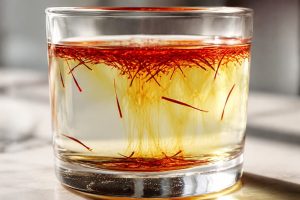
Drop a few threads into a small amount of cold water. Real saffron typically:
- Releases its color gradually
- Turns the water golden-yellow or orange-yellow
- Keeps its thread shape for a while
- Doesn’t produce an intense, unnatural red immediately
If the color spreads unusually fast within seconds, artificial dye may be involved — though results can also depend on the saffron type, dryness, and water temperature.
3. Pay Attention to the Aroma
Real saffron has a distinctive scent — a warm, earthy blend that’s slightly sweet and dry, without any resemblance to synthetic perfume or mustiness. Rub a small amount between your fingers and smell it gently. A scent that’s either overwhelmingly artificial or nearly absent points to lower quality. Aroma is harder to judge in powdered saffron, which is one more reason whole threads are the safer buy.
4. Taste a Small Amount
Real saffron has a slightly bitter, dry, distinctive taste — different from sweetness or an unusual sharp flavor. If saffron tastes distinctly sweet, it may have been mixed with syrup or other sweeteners. Only taste a very small amount for this test.
5. Check the Color Release
One of the most important quality signs is how saffron releases its color. Real saffron releases color gradually, and the resulting hue is usually golden-yellow or yellowish-orange. The threads themselves being red doesn’t mean the water needs to turn red too — an intense, instant red is often a sign of artificial dye.
To test this: drop a few threads in lukewarm water, wait a few minutes, and observe how quickly the water changes color and whether the threads retain some color. If the threads turn completely colorless very quickly, artificial dye is likely.
6. Rub It Between Your Fingers
After contact with moisture, real saffron shouldn’t feel excessively oily, sticky, or slimy. Gently rub a thread between your fingers — if the color transfers too quickly or the texture feels off, be cautious. This test isn’t conclusive on its own either, since dryness level affects the result.
7. Check the Packaging and Product Details
Even if the saffron looks right, packaging and product information matter just as much. Before buying, check for:
- Producer or seller name and address
- Exact product weight
- Production and expiry dates
- License number or traceable information
- Saffron type and grade
- Intact, sealed packaging
- Storage conditions
- A way to contact the seller
A product sold without any of this information, in poor packaging, or with unrealistic claims isn’t a safe choice. For more on grading and authenticity standards, visit our Quality & Authenticity page.
Quick Comparison: Real vs. Fake Saffron
| Trait | Real Saffron | Fake Saffron |
|---|---|---|
| Thread shape | Irregular, trumpet or jagged tip | Uniform, all threads look identical |
| Color release in water | Gradual, over a few minutes | Instant and overly intense |
| Aroma | Warm, earthy, lingering | Weak or overly synthetic |
| Taste | Slightly bitter, distinctive | Sweet or flavorless |
| Texture | Dry, no unnatural stickiness | Oily or slimy |
| Packaging | Full, traceable product info | No producer details |
Is the Baking Soda Test Reliable?
You may come across suggestions online to test saffron by mixing it with baking soda or other substances. These methods can cause a color reaction under certain conditions, but they’re not a standardized or conclusive home test for authenticity. A precise reading of saffron’s purity and composition is only possible through specialized lab testing.
Why Whole Threads Are a Better Buy Than Powder
Powdered saffron is convenient, but it’s much harder to verify — dye, plant fibers, or similar spices are easy to hide in powder form. Whole threads offer real advantages:
- Appearance can be inspected
- Aroma is easier to judge
- Lower risk of mixing with other substances
- You can grind it yourself at home
- Quality is easier to compare
If quality matters to you, choose whole threads from a trusted source. Browse our saffron products — including Super Negin, Poshal, Negin, and Sargol grades — or learn more about bulk and export orders on our Export & Trade page.
What to Look For When Buying Real Saffron
- Don’t judge saffron by red color alone
- Buy from a trusted, traceable seller
- Choose packaging with complete product information
- Prefer whole threads over ready-made powder
- Treat unusually low prices as a red flag, not a deal
- Check a small sample’s aroma and color release before committing
- Pay attention to production date and storage conditions
- For bulk orders, request samples and full specifications
Proper storage matters just as much as spotting authenticity at purchase — see our tips on saffron usage and storage.
Does a Deeper Red Always Mean Better Quality?
No. A deeper red color alone doesn’t indicate higher quality or authenticity. Saffron variety, which part of the stigma is used, and drying conditions all affect appearance. True quality should be judged on a combination of aroma, color release, taste, thread condition, purity, and product information — not color alone.
Final Thoughts: The Best Way to Identify Real Saffron
Don’t rely on just one test. Check thread appearance, aroma, taste, color release speed, texture, and packaging details together. The safest approach is buying from a seller who’s transparent about sourcing, quality, and product specs.
If purity and quality matter to you, whole threads with multiple checks are a far safer bet than unmarked powder. For free consultation and to buy authentic Iranian saffron, reach out through our contact page or learn more about us and our export experience.
Frequently Asked Questions
How can I tell real saffron at home? Check the thread appearance, aroma, taste, and how it releases color in water. Real saffron usually releases color gradually and has a distinct natural aroma — but no single home test is fully conclusive on its own.
Does real saffron release color in cold water? Yes, but usually gradually. If an intense red releases almost instantly, artificial dye or impurities are more likely.
What color is real saffron? Real saffron threads are usually red to dark red, though the exact shade depends on the type and grade. Color alone isn’t a reliable quality indicator.
Is powdered saffron automatically fake? No, powdered saffron isn’t necessarily fake — but impurities are much harder to detect in powder form. Whole threads from a trusted, well-packaged source are the safer choice.
Why does real saffron taste slightly bitter? Saffron’s natural compounds give it a distinctive, slightly bitter taste. A fully sweet or unusual flavor can indicate added substances.
What’s the best way to buy authentic saffron? Buy from a trusted seller, check packaging and product details, choose whole threads over powder, and evaluate aroma and color release before committing to a larger purchase.