
Using Saffron in Cooking: Golden Tips for Pilaf, Desserts, and Kebabs
Mastering cooking with saffron is the ultimate secret behind the deep aroma, authentic flavor, and radiant golden color of exquisite cuisine. Saffron is not merely a natural food coloring; it is a multi-dimensional spice that defines royal dishes, tender kebab marinades, traditional desserts, and even soothing warm beverages. Many home cooks face issues such as their saffron lacking aroma, failing to release its full color, or turning bitter—these stem from minor technical mistakes in preparation and timing. In this comprehensive guide, we explore all professional techniques of cooking with saffron step by step, so you can achieve restaurant-quality results every single time.
Principles and Types of Saffron Usage in Cooking
Quick Answer: Effective cooking with saffron relies on extracting three key active compounds: Crocin (responsible for deep golden color), Safranal (responsible for delicate aroma), and Picrocrocin (responsible for subtle pleasant bitterness). Direct high heat destroys these volatile compounds; therefore, saffron must always be ground and brewed properly before being introduced to recipes at the precise moment.
Before adding saffron to any recipe, you must unlock its concentrated essence. Pouring raw saffron threads directly into hot food yields minimal color and wastes precious threads.
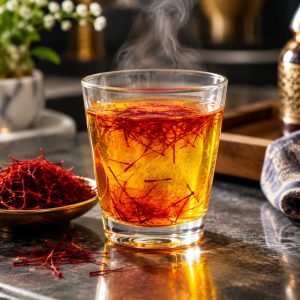
To master the extraction process, read our comprehensive guide: “The Proper Way to Brew Saffron: A Guide for Maximum Color and Aroma.” Using genuine saffron is equally vital; adulterated saffron loaded with artificial dyes will ruin the dish. To avoid counterfeit products, consult our guide on “7 Proven Methods to Identify Real Saffron vs Fake Saffron.“
1. Preparing Royal Rice: The Crown Jewel of Cooking with Saffron
Chef’s Secret: Never add brewed saffron to boiling water during the parboiling (draining) stage of rice. Most of the dissolved color and aroma will be poured down the drain. Saffron must be introduced during the steaming stage or as a final decorative layer.
Persian royal saffron rice (Chelo and Polo) is celebrated globally for its fragrance and aesthetics. To incorporate saffron into rice like a professional chef, use these two established techniques:
A) The Steaming Infusion Technique (Two-Tone Rice)
Once you transfer the parboiled rice into the pot for steaming, pour 2 to 3 tablespoons of thick brewed saffron over one side or on top of the rice pyramid, along with melted butter or ghee. Cover the pot with a tight lid and steam cloth (Damkoni). As steam circulates, it infuses the saffron essence deep into the grains without evaporating its volatile aromatic oils.
B) The Royal Platter Garnish (Zarshk-Polo Style)
Take 1 to 2 skimmers of freshly cooked hot rice and gently fold it in a shallow bowl with 2 tablespoons of concentrated saffron extract and melted butter. Use this radiant yellow rice alongside sautéed barberries (Zereshk), slivered pistachios, and slivered almonds to decorate the white rice platter right before serving.
Standard Dosage: For every 4 cups (approx. 600–700 grams) of raw long-grain rice, approximately 0.5 gram (half a teaspoon of ground powder) of premium Sargol or Negin saffron is ideal.
2. Sholeh Zard and Traditional Desserts: Cooking with Saffron in Confectionery
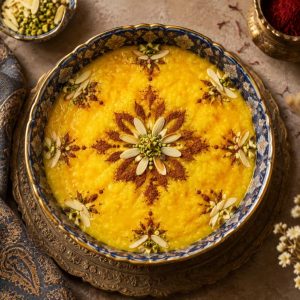
Critical Rule for Sholeh Zard: Always add your concentrated saffron before adding sugar. Adding sugar too early coats the broken rice starch granules and prevents the saffron color from penetrating into the core of the rice grains, leaving them pale inside.
In traditional puddings, halva, and saffron ice cream (Bastani Sonnati), saffron is the undisputed centerpiece. When making Sholeh Zard (traditional saffron rice pudding):
- Allow the broken aromatic rice to cook thoroughly until completely blossomed and soft.
- Add cold-brewed or ice-bloomed saffron extract to the pot. Stir thoroughly and let the rice grains absorb the golden hue for 10 to 15 minutes over low heat.
- Only after the uniform color is achieved, add the sugar, rosewater, and crushed green cardamom.
- Preventing watery pudding: After cooking, place a clean towel (Damkoni) over the pot and leave it on minimum flame with a heat diffuser for 20 minutes. This evaporates excess moisture and prevents the pudding from releasing water once chilled.
3. The Secret to Golden Kebabs: Saffron in Marinades and Glazes
The Golden Rule: Saffron First, Oil Later! Never mix raw meat, vegetable oil, and saffron together simultaneously. Fats and oils create a hydrophobic barrier over the meat fibers, blocking saffron’s water-soluble pigments from soaking in.
For restaurant-quality Joojeh Kabab (saffron chicken skewers) and grilled steaks:
- Pour concentrated, thick saffron extract directly onto the raw chicken pieces. Massage the meat thoroughly until every surface is saturated in deep orange.
- Cover and refrigerate for 30 to 60 minutes, allowing the crocin to bind directly with the meat protein.
- Next, coat the meat with melted butter or cooking oil to lock in juiciness.
- Finally, add sliced onions, lemon juice, salt, and black pepper, letting it marinate for 4 to 12 hours.
- Saffron Butter Basting: While skewers are sizzling over charcoal, brush them generously with a mixture of melted butter, lemon juice, and concentrated saffron. This caramelizes into a glossy, irresistible finish.
4. Saffron in Tea, Coffee, and Warm Beverages
Tip: Adding saffron to black tea, Turkish coffee, or herbal tea moderates the cool temperament (Mizaj) of foods and beverages, while delivering well-documented mood-enhancing and energizing benefits.
Infusing saffron into hot drinks requires minimal effort but delivers exceptional luxury:
- Saffron Persian Black Tea: Add 2 to 3 whole saffron filaments along with half a crushed cardamom pod into your porcelain teapot along with loose black tea leaves. Allow it to steep gently over indirect steam for 10 minutes.
- Saffron Coffee & Saffron Latte: In Arabic coffee or Turkish coffee, brew finely powdered saffron with green cardamom alongside your coffee grounds. For a modern cafe-style latte, dissolve 1 tablespoon of dense saffron extract into warm steamed milk before pulling the espresso shot.
Why shouldn’t we add saffron directly to high heat?
Short answer: High, direct heat (such as adding raw saffron directly to hot oil or boiling water) causes the rapid breakdown of crocin and safranal, resulting in diminished color and aroma; for this reason, it is always recommended to steep the saffron first and add it to the dish during the final stages of cooking.
Scientific research shows that saffron’s coloring and aromatic compounds degrade quickly when exposed to prolonged, high heat; consequently, the timing and method of adding saffron to a dish are just as important as the quality of the saffron itself.
Summary Table: Cooking with Saffron Across Different Recipes
| Dish Category | Recommended Grade | Exact Timing of Addition | Golden Pro Tip |
|---|---|---|---|
| Royal Persian Rice | Sargol or Super Negin | During final steaming or right before serving | Never add to boiling water during parboiling. |
| Sholeh Zard & Desserts | Sargol or Pushal | Mid-cooking, strictly before adding sugar | Let rice fully blossom before adding saffron. |
| Kebabs & Marinades | Premium Sargol | First step of marinating raw meat | Apply saffron before adding any oil or acidic ingredients. |
| Persian Stews (Khoresht) | Sargol | Final 15 to 20 minutes of simmering | Avoid prolonged boiling to keep volatile aroma intact. |
| Tea & Beverages | Super Negin (Whole Threads) | Steeping stage inside teapot | Steep over indirect steam for 5 to 10 minutes. |
Buy Fresh, Export-Grade Iranian Saffron
The secret to radiant dishes lies in using pure, unadulterated saffron with high coloring strength (Crocin > 240). Visit our online shop to purchase lab-tested Super Negin and Sargol saffron in 1-Mesghal and half-Mesghal culinary packs.
Frequently Asked Questions About Cooking with Saffron
1. When is the best time to add saffron to stews like Gheimeh and Fesenjan?
The optimal time is during the last 15 to 20 minutes of simmering. Prolonged, vigorous boiling causes safranal (the aromatic compound) to vaporize. Adding it near the end preserves maximum fragrance and a vivid golden glow.
2. How much saffron should I use per cup of rice?
As a rule of thumb, approximately 0.1 to 0.15 gram of high-grade saffron per cup of rice is sufficient. For a standard 4-cup family meal, 0.5 gram (about one-ninth of a Mesghal) delivers vibrant color and captivating aroma.
3. Why does my saffron lose its aroma during cooking?
There are two primary reasons: either the saffron is adulterated or old, or it was exposed to direct frying or excessive boiling. Saffron contains delicate essential oils that must never be fried directly in scorching hot oil.
4. In chicken marinades, should saffron be added before or after oil?
Always apply saffron first. Rubbing concentrated saffron onto bare raw meat allows water-soluble pigments to penetrate deep into the fibers. Oil should only be added after saffron has saturated the surface, as fat creates an impenetrable layer.
5. Can saffron be substituted with turmeric in royal dishes?
While turmeric provides a yellow tint, it possesses an earthy, warm flavor profile that completely differs from the honeyed, floral, and royal fragrance of saffron. In delicate dishes like Sholeh Zard, saffron ice cream, or royal Tahchin, turmeric is never an acceptable substitute.