
How to Store Saffron (Dry & Brewed) + 5 Secrets to Keep Aroma & Color
You invest in high-grade saffron, only to open the jar a few months later and find its distinct aroma faded and its color dull. Often, the saffron itself is not to blame—the culprit is how to store saffron properly. Dry saffron threads and brewed saffron liquid follow completely different storage rules, and mixing them up is one of the most common kitchen mistakes. In this definitive guide, we break down proper storage practices for both forms, settle the debate on whether saffron belongs in the fridge or freezer, and share 5 simple rules that will dramatically extend the aroma, flavor, and color of red gold.
Why Is Proper Saffron Storage So Critical?
Quick Answer: Saffron’s signature color, pungent aroma, and medicinal value rely on delicate bioactive compounds like crocin (color) and safranal (aroma). These compounds are extremely sensitive to light, heat, moisture, and ambient oxygen. Improper storage rapidly degrades them, turning even top-tier export saffron into weak, odorless threads.
Scientific studies on saffron shelf life prove that environmental factors directly accelerate the breakdown of these fragile compounds. Longevity is not purely determined by the grade of the stigma; it hinges heavily on the container and the surrounding environment. If you are uncertain whether your spice was fresh and authentic to begin with, consult our guide on How to Tell Real Saffron From Fake: 7 Simple Tests, as dyed or counterfeit saffron will never retain genuine flavor and benefits under any condition.
5 Secrets to Preserve Saffron Aroma and Color
Quick Answer: Follow five core principles: use an airtight opaque container, shield completely from direct light, eliminate humidity, maintain a stable cool temperature, and only grind or brew the exact portion you need today. These simple steps ensure optimal longevity for dry saffron threads.
1. Use an Airtight, Dark Container
Once you break the factory seal, immediately transfer your saffron into a dark amber glass jar or a gasket-sealed metal tin. Constant exposure to air causes rapid oxidation of crocin and allows the volatile essential oils responsible for safranal’s aroma to evaporate into thin air.
2. Shield Completely from Direct Light
Ultraviolet (UV) rays from sunlight as well as intense artificial kitchen lights disintegrate saffron’s delicate pigment structure. The sweet spot is a middle or bottom shelf inside a dark pantry cabinet, well away from any window.
3. Keep Dry and Block All Moisture
Moisture is the single most destructive enemy of dry saffron, encouraging mold development and microbial spoilage at higher levels. Keep your saffron jar far away from steam generated by kettles, stovetops, range hoods, or kitchen sinks (aim for relative humidity below 40%).
4. Maintain Cool, Stable Temperatures
Frequent temperature swings accelerate the evaporation of saffron’s essential volatile oils. A cool room temperature (below 20°C / 68°F) is ideal. Placing the container directly above the refrigerator, next to the oven, stovetop, or microwave—which generate localized heat cycles—is strictly inadvisable.
5. Grind or Brew Only What You Need
Whole, intact stigmas possess a natural protective cuticle and oxidize much slower than ground saffron powder. Grinding increases the surface area exposed to oxygen by hundreds of times. Only crush or brew what your immediate dish requires. To master maximizing yield, color extraction, and aroma without destroying nutrients, review our complete guide on The Proper Way to Brew Saffron: A Comprehensive Guide to Maximizing Color and Aroma.
What Is the Best Container for Storing Saffron?
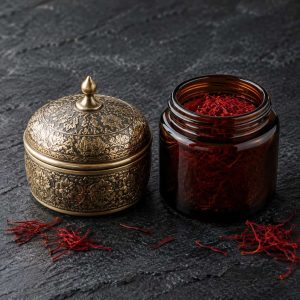
Quick Answer: The best containers are airtight, non-reactive, and light-blocking, such as dark amber glass jars with silicone seals or food-safe metal Khatam tins with snug lids. Standard paper bags or porous plastic bags are the poorest choices.
| Container Type | Key Advantages | Practical Considerations |
|---|---|---|
| Dark Amber Glass Jar (Sealed) | Blocks UV/light penetration; completely non-reactive and absorbs zero odors | Opt for rubber or silicone gasket lids for a true airtight barrier. |
| Metal Tin / Traditional Khatam Box | 100% light-blocking; durable physical protection against impact | Ensure the tin interior is thoroughly dry before transferring threads. |
| Clear Glass Jar (Crystal) | High visual appeal; allows easy inspection of thread quality | Must be kept inside a pitch-dark cabinet away from ambient room light. |
| Paper Packets or Thin Plastic Bags | Inexpensive, lightweight, and readily available | Not recommended; plastic is microporous and readily absorbs odors and humidity. |
If you are looking to purchase export-grade Persian saffron in professional, airtight containers, explore our premium lineup under Saffron Traders Products to see our certified protective packaging options.
Should Saffron Be Stored in the Refrigerator?
Quick Answer: No; dry saffron threads or powder should not be stored in the refrigerator because ambient humidity and cross-odors from other foods ruin its quality. Brewed saffron liquid, however, is the exact opposite and must be refrigerated in an airtight glass bottle.
| Saffron State | Store in Fridge? | Ideal Storage Location |
|---|---|---|
| Dry Saffron (Threads or Powder) | No (Not Recommended) | Dark, cool pantry cabinet free from humidity |
| Brewed Saffron Liquid | Yes (Mandatory) | Chilled fridge shelf in a sealed glass bottle (maximum 1–2 days) |
Why avoid refrigerating dry saffron? Domestic refrigerators are damp, moisture-laden environments. Every time you remove a cold jar, the temperature differential causes immediate condensation on the inside and outside of the container. Opening the lid at that moment draws liquid droplets straight onto the dehydrated threads. Furthermore, dry saffron acts like a natural sponge, absorbing pungent smells from adjacent foods like garlic, onions, or marinades. If dry threads absorb moisture, they risk mold growth; if they smell damp or musty, they must be discarded immediately.
Storing Saffron in the Freezer
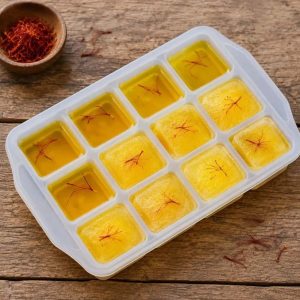
Quick Answer: Freezing dry saffron is only appropriate for long-term reserves (over one year) in vacuum-sealed batches. Conversely, freezing liquid brewed saffron inside ice cube trays is the ultimate chef trick to lock in fresh flavor and color for months.
Conditions for Freezing Dry Saffron
If you have bulk saffron that will not be consumed within 6 to 12 months, divide it into single-use portions, vacuum-seal them with foil and zip bags, and freeze. The golden rule: When retrieving a pack from the freezer, never break the seal immediately! Allow it to sit undisturbed at room temperature for at least 60 minutes to equilibrate, preventing moisture from condensing on the threads.
The Pro Method: Freezing Brewed Saffron in Ice Cube Trays
- Brew ground saffron to your desired concentration and allow it to cool completely to room temperature.
- Pour the golden liquid into clean silicone ice cube trays and place them in the freezer until fully solid.
- Pop the frozen saffron cubes out and immediately transfer them into a sealed, heavy-duty freezer zip bag to isolate them from freezer odors.
- Whenever cooking, simply drop 1 or 2 frozen cubes directly into your simmering stew, soup, or rice pot.
Important note: Never refreeze thawed saffron liquid, as thermal cycling heavily degrades crocin and safranal. The optimal freezer shelf life for saffron ice cubes is 1 to 3 months.
Proper Guidelines for Storing Brewed Saffron
Quick Answer: Brewed saffron has a water base and is vulnerable to rapid bacterial degradation and oxidation. Left at room temperature, it spoils in just 2 to 3 hours. Kept in a sealed glass bottle in the refrigerator, it remains fresh for a maximum of 24 to 48 hours.
Signs That Brewed Saffron Has Gone Bad
- A sour, fermented, or musty smell diverging from the pure floral-earthy aroma
- Color shift from vibrant fiery red/yellow to muddy dark brown or cloudy water
- Development of a slimy film, increased viscosity, or visible floating mold flecks
If any of these signs appear, discard the liquid right away. Reboiling sour saffron will not eliminate fungal mycotoxins or restore damaged compounds.
How Long Does Saffron Last? (Saffron Expiration Dates)
Quick Answer: Dry saffron boasts a standard shelf life of 2 to 3 years. Beyond this timeframe, threads generally do not become toxic; rather, their coloring strength (crocin) and natural perfume (safranal) fade, losing culinary and organoleptic potency.
Under international standards (such as ISO 3632), saffron’s expiration date marks a “loss of active quality threshold” rather than classic microbiological spoilage—provided moisture has not introduced mold. Old saffron will not make you sick, but you will need twice as many threads to achieve moderate color in your food.
Clear Signs of Quality Degradation in Dry Saffron:
- A drastic loss or absence of the distinct sharp, sweet, earthy saffron aroma
- Color fading from brilliant crimson ruby to dull maroon or pale brownish-red
- Excessive brittleness turning threads into dust upon touch, or clumping due to moisture
- Sluggish release of golden-yellow pigment when submerged in cold or iced water
If your saffron fails to impress even freshly unsealed, the issue may be poor raw quality rather than your pantry conditions. To understand thread grades and purity benchmarks, read our comparison on What Is the Difference Between Negin and Sargol Saffron? + Comparing Pushal and Dokhtar-Pich or review our Complete Guide to Buying Authentic Negin Saffron: Prices and Authenticity Tests.
Conclusion
The golden rule for safeguarding your dry saffron is straightforward: an airtight, dark container stored in a cool, dry, and pitch-dark pantry. Storing dry threads in the fridge is a mistake, but refrigerating brewed saffron liquid in the short term (up to 48 hours) is essential. For multi-month storage of brewed saffron, freezing it in single-use ice cube trays remains unbeatable. By respecting these guidelines, every single stigma retains its monetary and wellness value to the last pinch. To optimize timing and culinary technique when infusing saffron into dishes, discover our companion guide on Using Saffron in Cooking: Golden Tips for Pilaf, Desserts, and Kebabs. For bulk export orders or specialized hermetic packaging inquiries, our team at Saffron Traders is ready to assist you through our Contact Page.
Frequently Asked Questions About Saffron Storage
1. Should dry saffron threads be kept in the refrigerator?
No. Dry saffron should never be stored in the fridge because the moist atmosphere and food odors degrade its delicate compounds. A dark, cool, and dry pantry cabinet is the best place.
2. How long can brewed saffron liquid stay fresh in the fridge?
Brewed saffron liquid should be consumed within 1 to 2 days (maximum 48 hours) when stored in an airtight glass bottle in the fridge. For longer storage, freeze it into ice cubes.
3. What is the standard shelf life of dry saffron?
When stored inside airtight, light-blocking jars in a cool and dry cupboard, dry saffron threads retain peak color and aromatic potency for 2 to 3 years.
4. Is expired or old saffron toxic to consume?
No, old saffron is not toxic. Over time, crocin and safranal deteriorate, leading to weak coloring power and minimal aroma. It only becomes unsafe if exposed to humidity, developing mold or foul odors.
5. What is the best container to store saffron?
Airtight dark amber glass jars and gasket-sealed metal tins are optimal choices because they block UV light, ambient moisture, and air exchange.
6. Does ground saffron lose potency faster than whole stigmas?
Yes. Ground saffron powder has a vastly larger surface area exposed to oxygen, accelerating oxidation and flavor evaporation. It is recommended to grind only what you need for the week.