
Saffron Prices Today (1405) + Factors Affecting the Price of Authentic Saffron
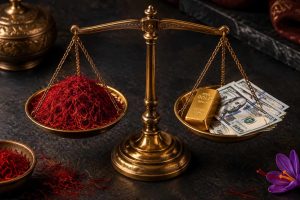
The price of saffron is determined by various factors, including exchange rates, crocin content, production costs, and supply and demand.
Coloring strength shows how much color saffron releases and is directly related to crocin concentration. Saffron with a higher coloring strength imparts the same color to food with a smaller amount, so if its price is slightly higher, it may actually be more economical in practice. We discussed the ISO 3632 standard and the quality superiority of Iranian saffron in detail in the article Best Saffron in the World: A Comprehensive Guide to Quality, Authenticity, and Iranian Saffron Exports.
Harvest Year; New Crop vs. Aged Saffron
New crop saffron (this year’s harvest) has a fresher aroma and color and is usually offered at a higher price. Aged or last year’s saffron might be cheaper, but its aroma and coloring strength decrease over time; therefore, buying with the harvest year mentioned on the package is important.
Exchange Rate and Exports
A large portion of Iran’s saffron is exported to foreign markets, which is why the exchange rate is one of the main factors in price fluctuations. Market analytical reports consider the exchange rate as one of the most important variables affecting the export price of saffron, along with global and domestic demand, supply, and importing countries’ tariffs. But the dollar is not the only factor; according to recent analyses, production volume, warehouse inventory, export volume, and harvest season also play significant roles. If you are interested in the export structure and its challenges, check out the article Iran’s Saffron Exports: Challenges, Permits, and Global Market Profits.
Supply, Demand, and Harvest Conditions
Saffron is an agricultural product and its supply depends on the weather; drought or early frost can reduce a year’s production and drive up prices. The harvest season is also short, and the labor cost for picking and cleaning the flowers during this window adds to the finished price. Saffron trading in the commodity exchange has also added another layer of transparency and fluctuation to the market.
Packaging and Intermediaries
A simple paper packet versus a luxury container or gift pack has different prices for the same weight of saffron, because the cost of the container, branding, and sales chain are added to the final price. The more intermediaries there are, the higher the final price usually is.
Why Is Saffron Expensive?
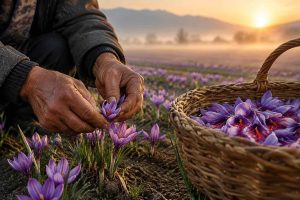
The short-term harvest period and the manual labor involved in picking the flowers affect the final cost of saffron.
Short answer: Because to produce one kilo of dry saffron, about 150,000 to 170,000 flowers must be individually hand-picked and cleaned. The harvest season lasts only a few weeks, so intensive labor and alternative machinery practically do not exist; this makes saffron the most expensive spice in the world.
This figure (about 150,000 to 170,000 flowers per kilo) is a common estimate and varies slightly depending on the source and figures, but the overall picture is the same: each flower has only a few stigma threads, and all stages of picking, separating, and drying are done by hand. Harvesting must also be done in the early morning hours and before the flowers fully open to preserve aroma and color. For this reason, saffron is called “Red Gold.” On the other hand, because its coloring and aroma are very strong, a very small amount is needed for each meal, and the cost per meal is actually less than what the price per gram suggests.
How is the Price of One Misqal of Saffron Calculated?
Short answer: Each misqal of saffron is equivalent to 4.608 grams. To calculate the price of one misqal from the price per gram, simply multiply the price per gram by 4.608; half a misqal is about 2.3 grams.
Misqal is the common unit for household saffron purchases in the Iranian market, and gram is the common unit for small packages and online shopping carts. For a fair comparison between two sellers, always convert prices to a common unit (e.g., each gram) and then compare them. Packaging and shipping costs should also be calculated separately, as they may form part of a product’s price.
Difference in Price Between Bulk and Packaged Saffron
Short answer: Bulk saffron is usually cheaper per gram because it lacks packaging and brand costs, but if the source is unknown, the risk of fraud and hygiene issues is higher. Packaged saffron is slightly more expensive, but the weight, harvest year, and specifications are printed on the package.
| Comparison Factor | Bulk Saffron | Packaged Saffron |
|---|---|---|
| Price per gram | Usually lower | Usually higher |
| Package information (weight, harvest year) | Usually none | Available |
| Hygiene and storage | Depends on the source | More controlled |
| Risk of fraud | Higher if source is unknown | Lower if seller is reputable |
| Suitable for | Wholesale buyers or quality experts | Household consumption, gifting |
If you buy in bulk, make sure to purchase from a source you know and know the methods of authenticity testing; the article How to Tell Real Saffron From Fake: 7 Simple Tests is written for this exact purpose.
When Is the Best Time to Buy Saffron?
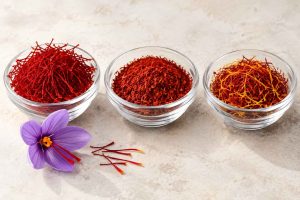
Short answer: New crop saffron enters the market from late autumn during the harvest season (Aban and Azar), and it is usually a good time to buy fresh saffron. Near Nowruz (New Year), demand rises and prices usually trend upward; in summer, new crop is less available. This is a general pattern, not a guarantee.
| Time Period | Normal Market Status | Buying Tip |
|---|---|---|
| Aban to Dey (Harvest Season) | Arrival of new crop | Fresh saffron, better color and aroma |
| Bahman and Esfand (Near Nowruz) | High demand for consumption and gifts | Buying earlier is usually better |
| Summer | Less new crop in the market | Always ask for the harvest year and source |
Because saffron prices also depend on currency and supply, there is no guaranteed time for a “price floor”; however, buying during the harvest season at least guarantees product freshness.
How to Determine the Fair Price of Authentic Saffron?
Short answer: A fair price means a price that matches the product’s type, grade, and harvest year. Compare prices only between products of the same type and grade, and if a price is much lower than others, ask why before buying.
- Specify the type and grade of the product and compare only similar types.
- Ask the seller which harvest year the saffron belongs to.
- If the seller has a laboratory test sheet or coloring strength certificate, request it.
- Convert prices to per gram and calculate shipping and packaging costs separately.
- A price much lower than the market is a warning sign; read more tips in the Complete Guide to Buying Authentic Negin Saffron: Prices and Authenticity Tests.
And if after buying, you want to get the most out of every gram of saffron, the articles Using Saffron in Cooking: Golden Tips for Pilaf, Desserts, and Kebabs and The Proper Way to Brew Saffron: A Comprehensive Guide to Maximizing Color and Aroma are a huge help.
Conclusion
The price of saffron is not a fixed number; it is the result of type, grade, coloring strength, harvest year, exchange rate, and packaging. The better you understand these factors, the easier it is to distinguish a fair price from an exaggerated or suspicious one. To see today’s prices for various types of saffron, visit our Products page, or if you need advice for household, gifting, or wholesale purchases, Contact Us.
Frequently Asked Questions About Saffron Prices
1. Why is the price of saffron not fixed?
Because it depends on the exchange rate, supply and demand, weather conditions of the harvest year, and product type, each of which changes throughout the year.
2. How many grams is one misqal of saffron?
Each misqal is equal to 4.608 grams; to calculate the price of a misqal, multiply the price per gram by this number.
3. Why is saffron so expensive?
Because every kilo of dry saffron requires about 150,000 to 170,000 flowers, all of which must be hand-picked and cleaned, and the harvest season lasts only a few weeks.
4. Is aged saffron cheaper than this year’s saffron?
Usually yes, but the aroma and coloring strength of aged saffron decrease over time; therefore, it is better to ask the seller for the harvest year.
5. Is bulk saffron cheaper or packaged saffron?
Bulk is usually cheaper per gram, but if the source is unknown, the risk of fraud and hygiene issues is higher; packaged saffron is slightly more expensive, but product details are specified on the package.