
Health Properties and Benefits of Saffron: Usage Methods, Recommended Dosage, and Important Tips
Saffron is far more than a luxury, aromatic culinary spice; bioactive compounds such as crocin, safranal, and picrocrocin have positioned this crimson botanical at the center of modern clinical research. Contemporary studies actively investigate its potential physiological role in mental well-being, cardiovascular function, metabolic health, skin vitality, and sleep architecture. However, the genuine therapeutic and nutritional value of saffron can only be harnessed when product purity, accurate preparation, and safe daily dosage boundaries are strictly observed.
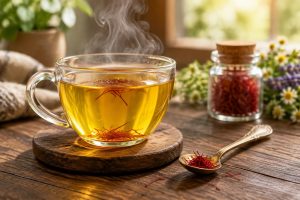
In this comprehensive, evidence-based guide, we examine what the real health properties of saffron are, who benefits most from its daily use, whether it genuinely supports mood and emotional balance, its dermatological advantages, and the clinical precautions required for safe consumption.
If you are beginning your journey into premium botanicals, we recommend reviewing our Complete Guide to Buying Authentic Negin Saffron to understand harvest grading, followed by our practical tutorial on How to Tell Real Saffron From Fake: 7 Simple Tests. If you appreciate fine cuisine, exploring Using Saffron in Cooking: Golden Tips for Pilaf, Desserts, and Kebabs and mastering The Proper Way to Brew Saffron will serve as indispensable companions to this guide.
What Are the Health Properties of Saffron and Why Does Modern Science Focus on It?
Quick Answer: Saffron’s health benefits stem primarily from its dense profile of bioactive carotenoids and volatile antioxidants—principally crocin, safranal, and picrocrocin. Peer-reviewed clinical literature indicates that these compounds combat oxidative stress, modulate systemic inflammation, protect neuronal integrity, and support cardiovascular and metabolic balance.
In traditional Persian pharmacology and historic medical compendiums, saffron (Crocus sativus L.) has long been cataloged as a warming, mood-elevating tonic that supports digestion and vital energy. Over recent decades, in-vitro and human clinical trials have validated that saffron functions beyond a sensory flavor enhancer. Its molecular components directly interface with major physiological pathways:
- Crocin: The primary water-soluble carotenoid responsible for saffron’s intense golden-red hue, exhibiting robust antioxidant, neuroprotective, and radical-scavenging properties.
- Safranal: The principal volatile compound responsible for saffron’s delicate floral aroma, frequently studied for its mild neuro-modulating, sedative, and mood-stabilizing effects.
- Picrocrocin: The bitter glucoside precursor that dictates taste while contributing significantly to the botanical’s overall bioactive profile.
According to systematic reviews cataloged in authoritative medical repositories, including PubMed Central clinical archives and nutritional monographs such as WebMD’s Saffron Guide, research remains heavily focused on neuro-psychiatry, vascular endothelial integrity, retinal cellular protection, and dermatological cellular repair.
Saffron for the Nervous System, Mood, Depression, and Restful Sleep
Quick Answer: Clinical trials demonstrate that standardized saffron extracts can improve subjective mood ratings, ease mild-to-moderate depressive symptoms, and enhance restorative sleep quality. However, saffron is a nutritional lifestyle supplement, not a sudden substitute for psychiatric prescriptions.
One of the most frequently queried dimensions of saffron supplementation is its impact on chronic stress, nervous exhaustion, and mood disorders. This therapeutic interest stems from saffron’s biochemical ability to modulate serotonin reuptake, enhance dopamine neurotransmission, and mitigate neuro-inflammation.
Is Saffron Clinically Effective for Depression and Mood Disorders?
Multiple double-blind, randomized controlled trials have compared standardized saffron extract (typically 30 mg daily) against placebo and active pharmaceutical comparators (such as fluoxetine and imipramine) in mild-to-moderate depression. The findings consistently show statistically significant improvements in depression score indices.
Important Medical Note: These findings must not be interpreted as medical clearance to discontinue or alter prescribed antidepressants. Any adjustment in psychological or psychiatric treatment requires direct supervision from a qualified medical physician.
Saffron for Stress Reduction and Anxiety Relief
Saffron’s reputation as a natural mood lifter is rooted in centuries of empirical use, now supported by clinical observations. Consuming saffron moderately—infused into a soothing warm herbal tea or blended with warm milk—helps balance cortisol levels, quiet mental chatter, and encourage physical relaxation. Individual responses vary depending on botanical quality, metabolic baseline, and consistency of intake.
Saffron for Nighttime Rest and Insomnia Management
Many wellness practitioners recommend consuming a light cup of saffron tea or warm saffron milk approximately 45 to 60 minutes before bed. Clinical data suggests that crocin and safranal extend non-REM sleep duration without inducing morning grogginess. To protect saffron’s heat-sensitive aromatic compounds, make sure you follow The Proper Way to Brew Saffron.
Does Saffron Cause Heart Palpitations or Promote Cardiovascular Calm?
Under moderate, recommended culinary and dietary dosages, pure saffron promotes vascular dilation and relaxation. However, acute excessive ingestion or physiological hypersensitivity can cause dizziness, mild agitation, or palpitations. Individuals with existing arrhythmias or severe low blood pressure should consult a cardiologist before adopting daily saffron supplementation.
Health Properties of Saffron for the Heart, Liver, Eyes, and Immune System
Quick Answer: By suppressing free-radical lipid peroxidation, saffron compounds support healthy blood vessel elasticity, shield hepatic tissue from oxidative burden, protect retinal photoreceptors, and strengthen systemic immune defenses.
When readers research topics like saffron for blood pressure, saffron liver cleanse, or saffron for macular health, they need realistic scientific context rather than marketing exaggerations.
Saffron for Cardiovascular Wellness and Blood Pressure
Bioactive crocetin and crocin have demonstrated the ability to inhibit low-density lipoprotein (LDL) oxidation, decrease arterial plaque progression in animal models, and stimulate nitric oxide production for smoother arterial dilation. Saffron does not replace antihypertensive pharmaceuticals, but within an active, balanced Mediterranean diet, it represents an exceptional vascular ally.
Saffron for Fatty Liver and Hepatic Detoxification
Hepatic research centers primarily on saffron’s antioxidant mechanisms. When hepatocytes encounter lower levels of reactive oxygen species (ROS), metabolic and filtration pathways function far more efficiently. Saffron provides supportive cellular shielding; however, non-alcoholic fatty liver disease (NAFLD) management still fundamentally depends on caloric balance, physical activity, and carbohydrate moderation.
Saffron for Retinal Protection and Vision Support
One of the most promising frontiers in nutritional ophthalmology is saffron’s affinity for retinal tissue. Clinical studies in early-stage age-related macular degeneration (AMD) show that daily saffron consumption can improve visual contrast sensitivity and protect delicate photoreceptor cells against photo-oxidative apoptosis. Saffron serves as a protective dietary intervention alongside routine ophthalmological care.
Saffron for Strengthening Immune Resilience
Saffron’s rich array of antioxidants and trace polyphenols strengthens the immune response by modulating inflammatory cytokine cascades. This systemic buffering action aids the body’s natural defense mechanisms without triggering uncontrolled immune hyper-reactivity.
Saffron Benefits Across Specific Demographic and Physiological Profiles
Quick Answer: Saffron provides tangible advantages for women regarding menstrual balance and PMS relief, and supports vitality and mood in men. However, during pregnancy and clinical lactation, strict medical moderation is mandatory.
Saffron Benefits for Women and Hormonal Balance
Extensive research covers saffron’s role in alleviating Premenstrual Syndrome (PMS) symptoms, including irritability, abdominal cramps, fatigue, and hormonal mood swings. Consuming balanced amounts of saffron helps ease physical tension and improve monthly well-being. However, chronic dysmenorrhea or polycystic ovarian syndrome (PCOS) requires direct clinical evaluation.
Saffron Benefits for Men’s Vitality and Performance
In men, studies have evaluated saffron’s influence on stamina, oxidative stress reduction in reproductive tissues, and mild psychogenic erectile difficulties. While results show positive trends in subjective stamina and mood-related performance, sustainable vitality relies far more heavily on restorative sleep, resistance exercise, and balanced metabolic health.
Saffron Precautions During Pregnancy and Breastfeeding
During pregnancy—especially throughout the critical first trimester—uterine stimulation is a known risk associated with high-dose botanical intake. While trace culinary saffron used in family meals is generally recognized as safe, therapeutic dosages, medicinal extracts, and concentrated saffron infusions are strictly contraindicated during pregnancy without direct obstetrical approval.
Saffron for Skin and Hair: Radiance, Hyperpigmentation, and Cellular Vitality
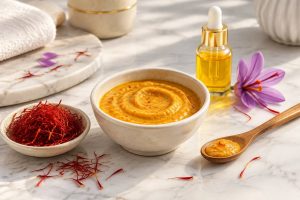
Preparing a natural homemade saffron mask to brighten the skin, clear up acne, and combat premature aging.
Quick Answer: Applied topically in gentle formulations or ingested consistently in low doses, saffron improves skin radiance, combats dullness, and neutralizes free radicals caused by UV exposure. It is a supportive cosmetic aid rather than an overnight cure for deep dermal pigmentation.
Natural skincare enthusiasts often research homemade saffron masks for acne scars, skin brightening, and anti-aging remedies:
Saffron for Dark Spots, Blemishes, and Melasma
Because crocin demonstrates mild anti-tyrosinase activity, consistent topical applications (such as saffron infused in pure rosewater or plain yogurt) can visibly reduce surface dullness and diminish light hyperpigmentation. Deep-seated hormonal melasma, however, still demands specialized dermatological treatment.
Skin Brightening: Authentic Botanical Science vs. Exaggerated Claims
Saffron does not alter a person’s natural melanin genetics; instead, it boosts microcirculation and quenches dulling oxidative surface stress, imparting a clean, translucent, and refreshed glow to the skin. Users with sensitive or allergic skin profiles must always conduct a 24-hour patch test before applying topical saffron preparations.
Scalp Health and Follicle Nourishment
Saffron supports hair health primarily by soothing scalp inflammation, reducing oxidative stress at the follicle root, and improving blood flow. It serves as a botanical scalp conditioner rather than an isolated solution for genetic or endocrine hair loss.
Best Methods to Consume Saffron for Maximum Health Benefits
Quick Answer: The most effective method to consume saffron is daily, moderate intake of finely pulverized, properly bloomed threads integrated into warm water, milk, or balanced culinary recipes.
| Consumption Method | Typical Preparation | Key Wellness Advantage | Essential Precaution |
|---|---|---|---|
| Culinary Integration | Rice dishes, stews, warm broths | Gradual, consistent nutrient intake with pleasant flavor | Avoid excessive frying in high heat |
| Saffron Herbal Tea | 3–5 threads infused in warm water | Rapid absorption; soothing mental clarity | Start with low concentrations |
| Warm Saffron Milk | Steamed milk infused with bloomed saffron | Encourages restorative sleep and relaxation | Consume 45 min before bedtime |
| Topical Facial Mask | Saffron threads bloomed in yogurt or honey | Enhances skin luminosity and microcirculation | Always patch-test for allergies first |
Morning Fasting Consumption vs. Evening Warm Saffron Milk
- Morning Intake: A delicate warm infusion of saffron taken in the morning can boost mental alertness, elevate mood, and provide sustained antioxidant defense.
- Evening Intake: Infusing bloomed saffron into warm milk creates a comforting nighttime ritual that leverages both tryptophan from milk and safranal from saffron for restorative sleep.
Recommended Daily Dosage and Safety Thresholds
Quick Answer: For culinary and daily wellness maintenance, 20 to 30 mg (roughly 10 to 15 filaments) per day is an optimal, clinically validated range. Ingesting more than 1 to 1.5 grams at once is excessive, while 5 grams approaches acute medical toxicity.
Nutritional safety requires avoiding reckless, concentrated megadoses:
- Culinary & Preventive Wellness: 15–30 mg daily (a light pinch of quality threads).
- Clinical Supplementation Trials: Standardized extracts providing 30 mg daily under supervised regimens.
- Upper Safe Limit: Do not exceed 200–300 mg daily for routine non-prescription use.
Potential Side Effects, Contraindications, and Risks of Overconsumption
Quick Answer: Excessive saffron intake can induce nausea, dizziness, headaches, sudden hypotension, digestive distress, and restlessness. Chronic high doses interfere with blood clotting and prescription psychiatric medications.
High-Risk Groups Requiring Medical Consultation
- Pregnant women (due to potential uterine contractions).
- Individuals taking prescription anticoagulants, antiplatelets, or blood pressure medications.
- Patients on prescription selective serotonin reuptake inhibitors (SSRIs) or mood stabilizers.
- Individuals with severe hypotension or unstable cardiac conditions.
The Health Hazards of Adulterated Saffron
Health risks are often compounded by counterfeit products. Unregulated vendors frequently adulterate fake threads with industrial coal-tar dyes (such as tartrazine or Sudan dyes), dyed corn silk, shredded wood fibers, or chemical bulking agents. These toxic adulterants present real health hazards.
To safeguard your health, verify testing techniques in How to Tell Real Saffron From Fake: 7 Simple Tests and explore the global standard benchmarks in our guide to the Best Saffron in the World: A Comprehensive Guide to Quality, Authenticity, and Iranian Saffron Exports.
Summary of Core Health Benefits at a Glance
| Target Physiological System | Potential Botanical Benefit | Clinical Evidence Strength | Practical Role in Daily Life |
|---|---|---|---|
| Nervous System & Mood | Supports emotional balance, stress relief, and sleep quality | Moderate to Strong (Multiple human trials) | Functional lifestyle supplement; not a prescription replacement |
| Cardiovascular System | Promotes healthy endothelial function and antioxidant balance | Preliminary to Moderate | Complements regular cardiovascular exercise and nutrition |
| Skin & Complexion | Improves surface clarity and neutralizes UV-induced oxidation | Preliminary to Moderate | Gentle supportive topical and dietary cosmetic aid |
| Vision & Retinal Care | Protects macular photoreceptors from light-induced damage | Promising, focused human trials | Nutritional support alongside routine vision checkups |
| Systemic Immunity | Quenches free radicals and supports inflammatory homeostasis | Strong (In-vitro & biomarker trials) | Relies on genuine botanical purity and regular low dosing |
How to Select Premium Saffron for Daily Wellness and Trade
The health advantages detailed in this guide rely directly on genuine, lab-verified saffron rich in natural crocin and safranal. Low-grade, depleted, or artificially colored strands offer neither botanical potency nor flavor.
If you are evaluating commercial grades, our analysis on What Is the Difference Between Negin and Sargol Saffron? outlines thread anatomy, while our export overview in Iran’s Saffron Exports: Challenges, Permits, and Global Market Profits explains international logistics and trade standards.
Explore our certified wholesale and retail offerings directly on our Products Page, learn more about our quality control processes on our About Us Page, or speak with our export and supply specialists through our Contact Page.
Frequently Asked Questions (FAQ)
What are the main health properties of saffron and what conditions does it support?
Saffron is widely recognized for its high antioxidant concentration, mood-stabilizing properties, cardiovascular support, and skin-brightening effects. It is utilized as a natural dietary supplement to support nervous relaxation, sleep quality, and cellular health.
Does saffron accelerate weight loss or fat burning?
Saffron is not a thermogenic fat burner. However, clinical studies suggest that daily intake of standardized saffron extract can curb appetite, improve emotional eating habits, and reduce mid-day snacking by stabilizing mood and serotonin levels.
How much saffron should I safely consume each day for health purposes?
For daily dietary consumption, a safe and effective amount is roughly 20 to 30 milligrams (approximately 10 to 15 threads). High single-dose quantities exceeding 1 gram are unnecessary and not recommended without professional medical guidance.
What is the most effective method to consume saffron for therapeutic absorption?
The most effective approach is gently grinding pure saffron filaments and blooming them in cold ice water or warm liquid before blending into warm water, organic milk, or daily home-cooked dishes. Maintaining a low, consistent daily dosage yields better physiological results than occasional heavy consumption.
Is daily consumption of saffron safe?
Yes, daily consumption is completely safe for healthy adults provided intake remains within the recommended range of 20 to 30 mg. Individuals who are pregnant, taking blood-thinning medication, or managing severe chronic illnesses should seek clearance from their physician first.